
The 10 Best Diaper Rash Creams: Safe and Gentle
- Vaibhav Sharma

- Mar 28
- 10 min read
Updated: Mar 30

If you’re a parent, you already know this—diaper rash can show up out of nowhere and turn your happy baby into a crying one in minutes.
I’ve been there. Late-night diaper changes, trying 3–4 creams, wondering “Which diaper rash cream actually works?”
After trying multiple products and reading what thousands of parents swear by, I’ve put together this honest, no-fluff guide to the best diaper rash creams—what works, what doesn’t, and which one is right for your baby.
What Causes Diaper Rash? (And Why Cream Choice Matters)
Diaper rash — clinically known as irritant contact dermatitis — is primarily caused by:
Prolonged moisture exposure from urine and stool
Friction from diaper material rubbing against skin
Chemical irritants in wipes, detergents, or diapers
Yeast (Candida) overgrowth, especially after antibiotic use
Food introduction changes that alter stool composition
Understanding the cause helps you choose the right cream. A zinc oxide-based paste works best for moisture-related rashes, while a yeast-related rash (appearing as bright red with defined borders and satellite spots) requires antifungal treatment — not a standard barrier cream.
What to Look for in a Diaper Rash Cream
Before selecting a product, evaluate these key criteria:
Ingredient | Function | Recommended % |
Zinc Oxide | Forms a physical barrier; anti-inflammatory | 10–40% |
Petrolatum | Occlusive moisture barrier | As high as possible |
Dimethicone | Skin protectant; water-repellent | 1–5% |
Lanolin | Emollient; skin softening | Moderate |
Ceramides | Restores skin barrier function | Varies |
Avoid creams containing: alcohol, fragrance, boric acid, phenol, camphor, or benzocaine — all of which can irritate or harm infant skin.
Quick Comparison: Top 10 Diaper Rash Creams at a Glance
# | Product | Best For | Key Ingredient | Zinc Oxide % | Price Range |
1 | Desitin Maximum Strength | Severe/painful rashes | Zinc Oxide | 40% | $$ |
2 | Aquaphor Baby Healing Ointment | Daily prevention | Petrolatum | None | $$ |
3 | Boudreaux's Butt Paste | Moderate rashes | Zinc Oxide | 16% | $$ |
4 | Triple Paste Medicated Ointment | Stubborn/chronic rashes | Zinc Oxide | 12.8% | $$$ |
5 | A+D Original Diaper Rash Ointment | Budget everyday use | Petrolatum + Zinc | 10% | $ |
6 | Burt's Bees Baby Ointment | Natural/plant-based care | Zinc Oxide | 40% | $$ |
7 | Mustela Vitamin Barrier Cream | Zinc Oxide + Vitamins | 10% | $$$ | |
8 | The Honest Company Diaper Rash Cream | Eco-conscious parents | Zinc Oxide | 9% | $$ |
9 | Earth Mama Organic Diaper Balm | Newborns; zinc-free | Shea Butter + Calendula | None | $$$ |
10 | CeraVe Baby Healing Ointment | Eczema-prone/sensitive skin | Ceramides + Petrolatum | None | $$ |
The 10 Best Diaper Rash Creams — In-Depth Reviews
1. Desitin Maximum Strength — Best for Severe Rashes
Active Ingredient: 40% Zinc Oxide Texture: Very thick paste Fragrance-Free: Yes

Desitin Maximum Strength is the clinically recommended first-line treatment for moderate to severe diaper rash. Its 40% zinc oxide concentration — among the highest of any over-the-counter product — creates a near-impenetrable physical barrier between the skin and moisture.
Zinc oxide at this concentration has demonstrated anti-inflammatory and antimicrobial properties in multiple dermatological studies, making it effective not just as a barrier but also as an active healing agent.
Key Benefits:
Highest zinc oxide concentration available OTC (40%)
Starts forming a protective barrier within minutes of application
Clinically proven to reduce redness and irritation
Free from fragrance, preservatives, and harsh chemicals
Drawbacks:
Very thick consistency — can be difficult to spread
Leaves a visible white residue on skin
May stain cloth diapers
Who Should Use It: Babies with active, painful, or worsening rashes. Not ideal for daily prevention due to its heavy texture.
Clinical Note: The AAP recommends zinc oxide-based creams as the primary treatment for irritant diaper dermatitis. 40% formulations are considered the most effective for acute cases.
2. Aquaphor Baby Healing Ointment — Best for Daily Prevention
Active Ingredient: 41% Petrolatum Texture: Smooth ointment Fragrance-Free: Yes

Aquaphor Baby is not a treatment cream — it is a preventive occlusive barrier ointment. Its petrolatum base creates a breathable seal over the skin, locking in moisture and preventing urine and stool from reaching the skin surface.
Dermatologists frequently recommend Aquaphor for diaper area protection between diaper changes, especially for newborns with particularly sensitive skin.
Key Benefits:
Gentle enough for daily use from birth
Multipurpose: also works on chapped lips, dry skin, and minor cuts
Does not sting or cause discomfort on sensitive skin
Hypoallergenic and fragrance-free
Drawbacks:
Contains no zinc oxide — not effective for treating existing rashes
Can feel greasy and transfer to clothing
Less effective for moderate or severe rash cases
Who Should Use It: Newborns and infants as a preventive daily barrier. Pair with a zinc oxide cream when a rash is already present.
3. Boudreaux's Butt Paste — Best Thick Barrier Cream
Active Ingredient: 16% Zinc Oxide Texture: Dense, thick paste Fragrance-Free: Yes (Original formula)

Boudreaux's Butt Paste has been a staple in American households for over 40 years. Its 16% zinc oxide formula strikes a balance between the heavy-duty Desitin paste and lighter everyday options — making it a versatile choice for both prevention and treatment of mild to moderate rashes.
Key Benefits:
Thick consistency stays in place between diaper changes
Effective for moderate rashes without being overly heavy
Pediatrician-recommended formula
Free from dyes, talc, and preservatives
Also available in a Maximum Strength (40%) formulation
Drawbacks:
Original formula contains castor oil (potential allergen in rare cases)
Some parents find application messy
Slightly higher price than drugstore alternatives
Who Should Use It: Parents wanting one product that works for both daily prevention and mild-to-moderate rash treatment.
4. Triple Paste Medicated Ointment — Best for Stubborn Rashes
Active Ingredient: 12.8% Zinc Oxide Texture: Thick, white ointment Fragrance-Free: Yes

Triple Paste was originally developed by a pharmacist whose child had a persistent diaper rash that no over-the-counter cream could resolve. Its proprietary formulation combines zinc oxide with a unique blend of skin-soothing ingredients including oat flour and petrolatum.
This product is frequently recommended by pediatric dermatologists for rashes that have persisted beyond 3–4 days despite standard treatment.
Key Benefits:
Specifically formulated for treatment-resistant rashes
Contains oat flour — known for its anti-inflammatory and skin-calming properties
Fragrance-free, paraben-free, and dye-free
Proven effective in cases where other creams have failed
Drawbacks:
Premium price point — one of the most expensive options
Thick formula requires thorough cleanup
Not widely available in all physical retail stores
Who Should Use It: Parents whose babies have chronic, recurring, or treatment-resistant diaper rashes.
5. A+D Original Diaper Rash Ointment — Best Budget Option
Active Ingredient: Petrolatum 53.4%, Lanolin Texture: Smooth, spreadable ointment Fragrance-Free: Yes

A+D Ointment has been trusted by parents since the 1940s. It is a petrolatum-lanolin combination that works as an effective moisture barrier for everyday diaper care. Its lightweight texture makes it one of the easiest to apply and remove.
Key Benefits:
Most affordable option on this list
Lanolin provides excellent skin-softening properties
Easy to spread even on agitated or squirming babies
Available in virtually every pharmacy and grocery store
Drawbacks:
No zinc oxide in original formula (limited treatment capacity)
Lanolin can cause reactions in babies with wool sensitivities
Less effective for anything beyond mild irritation
Who Should Use It: Budget-conscious parents looking for a reliable daily barrier ointment for prevention.
6. Burt's Bees Baby Diaper Rash Ointment — Best Natural Option
Active Ingredient: 40% Zinc Oxide Texture: Thick cream Fragrance-Free: Yes
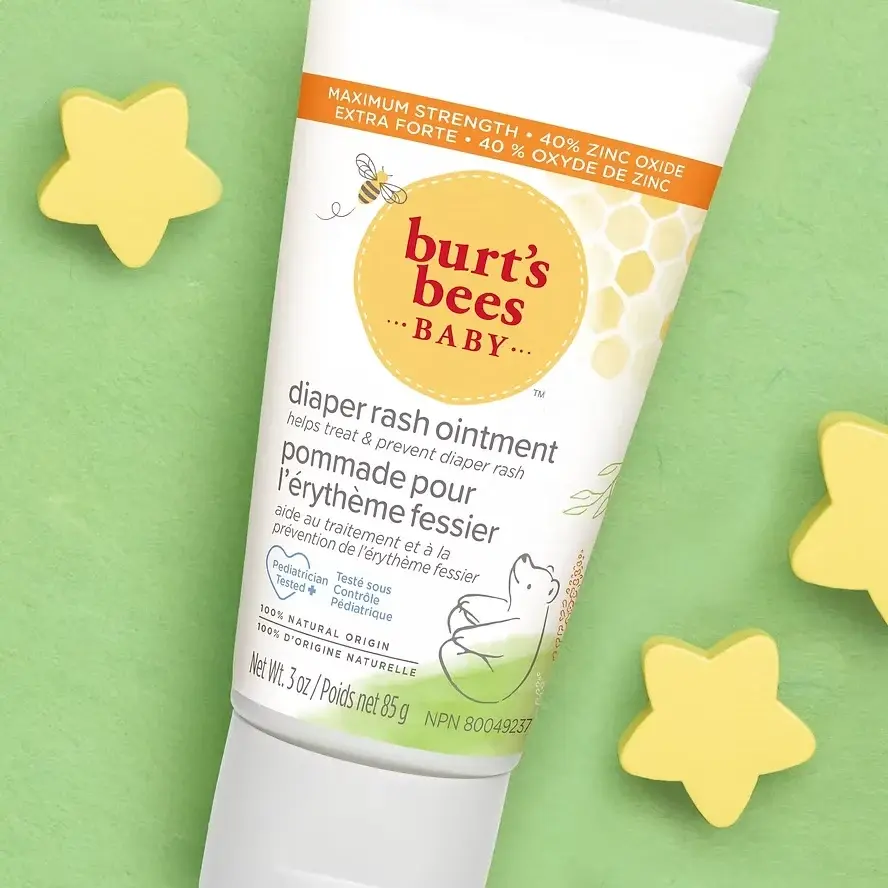
Burt's Bees Baby Ointment delivers pharmaceutical-grade zinc oxide concentration (40%) in a formula built around naturally-derived ingredients. It is free from parabens, phthalates, petrolatum, and synthetic fragrances — making it one of the cleanest clinical-strength options available.
Key Benefits:
40% zinc oxide — same clinical strength as Desitin
No petrolatum, parabens, or synthetic additives
USDA-certified natural ingredients
Pediatrician-tested for safety on newborn skin
Drawbacks:
Natural formula may have a slightly earthy scent (from beeswax)
Can be more difficult to remove due to natural wax base
Slightly higher price than conventional alternatives
Who Should Use It: Parents who prioritize clean, natural formulations but still need clinical-strength treatment.
7. Mustela Vitamin Barrier Cream — Best Premium Choice
Active Ingredient: 10% Zinc Oxide + Vitamin E & F Texture: Light cream Fragrance-Free: Lightly scented (hypoallergenic)

Mustela's Vitamin Barrier Cream combines zinc oxide with fat-soluble vitamins to both treat and actively repair the skin barrier. Its lightweight texture is unlike most diaper creams — it spreads easily and absorbs partially into the skin rather than sitting on top.
Key Benefits:
Contains Vitamin E (antioxidant) and Vitamin F (essential fatty acids) for skin repair
98% natural ingredients
Hypoallergenic — tested on sensitive baby skin
Works as both a preventive and treatment cream
Drawbacks:
Lower zinc oxide concentration (10%) limits effectiveness for severe rashes
Premium price — among the most expensive options per ounce
Light scent may not suit fragrance-sensitive babies
Who Should Use It: Parents seeking a premium, skin-repairing daily cream for sensitive or eczema-prone skin.
8. The Honest Company Diaper Rash Cream — Best Eco-Friendly Option
Active Ingredient: 9% Zinc Oxide Texture: Smooth, creamy Fragrance-Free: Yes

The Honest Company's Diaper Rash Cream is built on a plant-based formula that eliminates common chemical irritants while still providing zinc oxide protection. Its clean ingredient list includes organic shea butter, coconut oil, and beeswax.
Key Benefits:
Hypoallergenic and clinically tested
Plant-based, sustainably sourced ingredients
Smooth texture for easy application
Free from 2,500+ questionable chemicals per Honest's "No List"
Drawbacks:
9% zinc oxide is on the lower end — best for mild rashes or prevention
Can be less effective for severe or stubborn rashes
Price is higher than conventional drugstore options
Who Should Use It: Eco-conscious parents dealing with mild rashes or seeking a clean daily prevention cream.
9. Earth Mama Organic Diaper Balm — Best for Newborns
Active Ingredient: Organic Shea Butter, Calendula, Cocoa Butter Texture: Soft balmZinc Oxide: None Fragrance-
Free: Yes (naturally scented from herbs)

Earth Mama's Organic Diaper Balm is one of the few zinc oxide-free options on this list — making it an excellent choice for newborns whose skin is too delicate even for standard barrier creams. Its certified organic formula relies on calendula, a botanical ingredient with well-documented anti-inflammatory and wound-healing properties.
Key Benefits:
USDA Certified Organic
Zinc oxide-free — ideal for the most sensitive newborn skin
Calendula has clinical evidence supporting wound healing and anti-inflammation
Safe for cloth diaper use (no zinc oxide staining)
Drawbacks:
Not suitable for moderate or severe rash treatment
Shorter shelf life due to organic, preservative-free formula
More expensive per ounce than conventional options
Who Should Use It: Newborns (0–3 months), parents using cloth diapers, or babies with extremely reactive skin.
10. CeraVe Baby Healing Ointment — Best for Sensitive & Eczema-Prone Skin
Active Ingredient: Ceramides (1, 3, 6-II), Petrolatum, Hyaluronic Acid Texture: Rich, smooth ointment Zinc Oxide: None Fragrance-Free: Yes
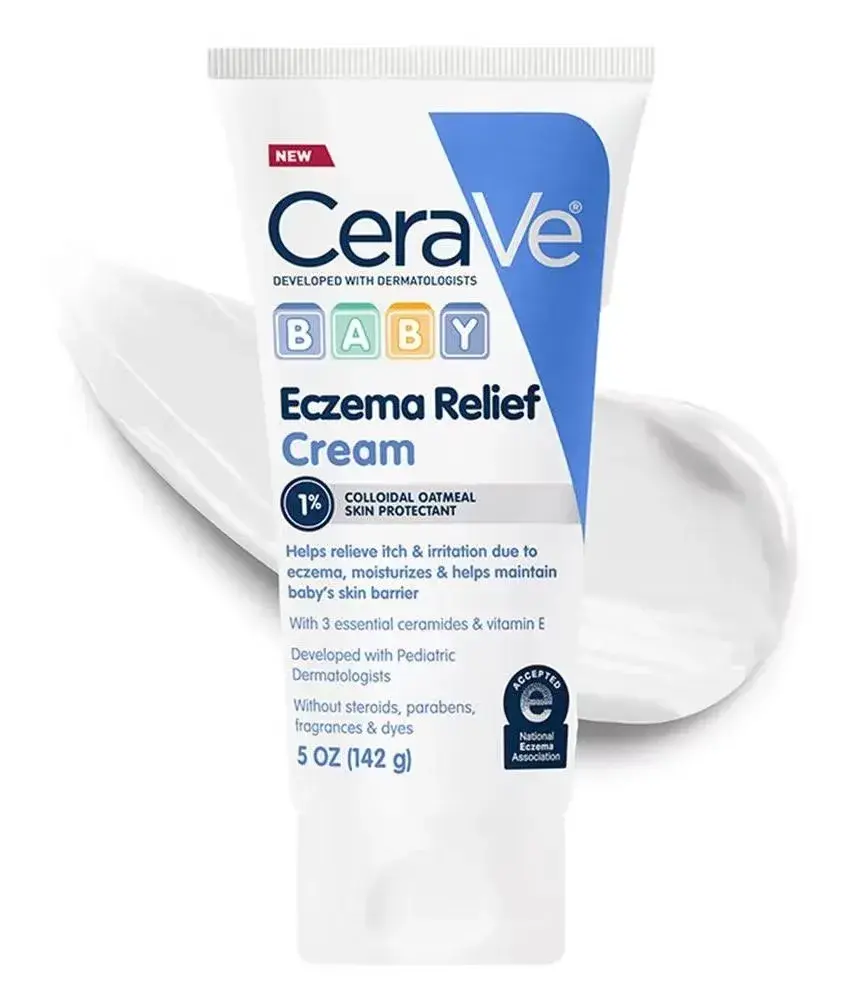
CeraVe is dermatologist-developed and built around ceramide technology — the same lipids that form your skin's natural protective barrier. For babies with eczema or chronically dry, reactive skin, this ointment helps restore and reinforce the compromised skin barrier rather than just sitting on top of it.
Key Benefits:
Contains 3 essential ceramides that repair and strengthen skin barrier
Developed with the National Eczema Association
Hyaluronic acid provides long-lasting hydration
Fragrance-free, paraben-free, and non-comedogenic
Gentle enough for twice-daily use
Drawbacks:
No zinc oxide — not a first-line treatment for standard diaper rash
Best used as a complement to a zinc oxide cream, not a standalone treatment
Can feel heavy if over-applied
Who Should Use It: Babies with eczema, chronically sensitive skin, or recurring skin barrier breakdown.
How to Apply Diaper Rash Cream Correctly
Proper application is just as important as choosing the right product:
Clean gently — Use fragrance-free wipes or lukewarm water. Pat dry — never rub.
Allow the skin to air dry for 1–2 minutes before applying cream.
Apply a thick layer — A thin smear is not sufficient. The cream should visibly coat the entire diaper area.
Do not rub in — Lay the cream on top of the skin; rubbing can cause additional friction and irritation.
Reapply at every diaper change until the rash has fully resolved.
When to See a Pediatrician
Diaper rash usually clears within 3–4 days with proper cream use. Seek medical attention if:
The rash spreads beyond the diaper area
Blisters, open sores, or bleeding appear
Your baby develops a fever alongside the rash
The rash has not improved after 7 days of consistent treatment
The rash appears bright red with defined borders and small satellite spots (possible yeast infection — requires antifungal treatment)
Your baby seems to be in significant pain during diaper changes
Frequently Asked Questions (FAQ)
Q: What percentage of zinc oxide is best for diaper rash?
For active, painful rashes, a concentration of 40% zinc oxide (found in Desitin Maximum Strength and Burt's Bees) provides the most effective barrier and anti-inflammatory action. For daily prevention, 10–16% is generally sufficient.
Q: How often should I apply diaper rash cream?
Apply cream at every diaper change when treating an active rash. For prevention, once or twice a day — particularly at bedtime when your baby may go longer between changes — is adequate.
Q: Can I use diaper rash cream as a preventive measure even if there's no rash?
Yes. Applying a thin barrier cream (such as Aquaphor or A+D) at each change is a clinically supported strategy to prevent rash development, especially in babies prone to skin irritation.
Q: Is Desitin or Aquaphor better for diaper rash?
They serve different purposes. Desitin (40% zinc oxide) is superior for treating an existing rash. Aquaphor (petrolatum-based) is better suited for daily prevention when no rash is present. Many pediatricians recommend using both — Aquaphor daily and Desitin when a rash appears.
Q: What ingredients should I avoid in diaper rash creams?
Avoid products containing: fragrance, alcohol, boric acid, phenol, camphor, benzocaine, salicylates, and talc. These can irritate, numb, or in some cases be toxic to infant skin.
Q: How long does it take for diaper rash cream to work?
A good zinc oxide cream should show visible improvement — reduced redness and less irritation — within 12–24 hours. Full resolution of mild rashes typically occurs within 2–3 days. If no improvement is seen after 4–5 days, consult your pediatrician.
Q: Can diaper rash cream be used on newborns?
Yes, but choose carefully. For newborns under 4 weeks, zinc oxide-free options like Earth Mama Organic Diaper Balm or Aquaphor are gentlest. Always patch-test a small area first.
Q: What is the difference between a diaper rash cream and a diaper rash ointment?
Creams are lighter and partially absorbed by the skin. Ointments are thicker, oil-based, and sit on top of the skin forming a stronger barrier. For treatment, ointments and pastes are generally more effective. For daily prevention, creams are easier to apply.
Disclaimer
This article is for informational purposes only and does not replace professional medical advice. Always consult a pediatrician for diagnosis or treatment. If your baby’s diaper rash persists or worsens, seek medical care promptly.
Sources & Medical References
American Academy of Pediatrics (AAP) — Diaper Rash Guidelines: https://www.healthychildren.org
Mayo Clinic — Diaper Rash Overview: https://www.mayoclinic.org/diseases-conditions/diaper-rash
National Eczema Association — Skin Barrier Research: https://nationaleczema.org
Journal of Pediatric Dermatology — Zinc Oxide in Irritant Contact Dermatitis (2021)
U.S. National Library of Medicine — Calendula officinalis skin healing properties: https://pubmed.ncbi.nlm.nih.gov


Comments